
Texas Drive Clean Lapse Detection: ODL Path After Suspension
Get My Reinstatement SR-22 QuoteHow Texas TexasSure Detects Your Lapse Before You Know Coverage Dropped
Texas uses the TexasSure Vehicle Insurance Verification program, an electronic database maintained by TxDMV that receives real-time policy status updates from every licensed carrier in the state. When your carrier cancels your policy for non-payment or you let coverage lapse, that cancellation is reported to TexasSure immediately — typically within 24 to 48 hours of the effective cancellation date, not the notice date you received in the mail.
The suspension clock begins ticking from the carrier-reported lapse date, not from the day you open the TxDMV notice letter. Most drivers discover the suspension 30 to 45 days after the actual lapse, by which time TxDMV has already processed the suspension and mailed the notice. The letter instructs you to surrender your license and vehicle registration within 30 days or face additional penalties.
Texas Transportation Code Chapter 601 requires all registered vehicles to maintain continuous liability coverage at minimum $30,000 per person / $60,000 per accident bodily injury and $25,000 property damage. TexasSure continuously monitors compliance — there is no grace period. If the system shows a lapse for any registered vehicle tied to your driver license, TxDMV suspends both your driving privilege and vehicle registration simultaneously under Transportation Code §601.231.
What the Suspension Notice Tells You and What It Leaves Out
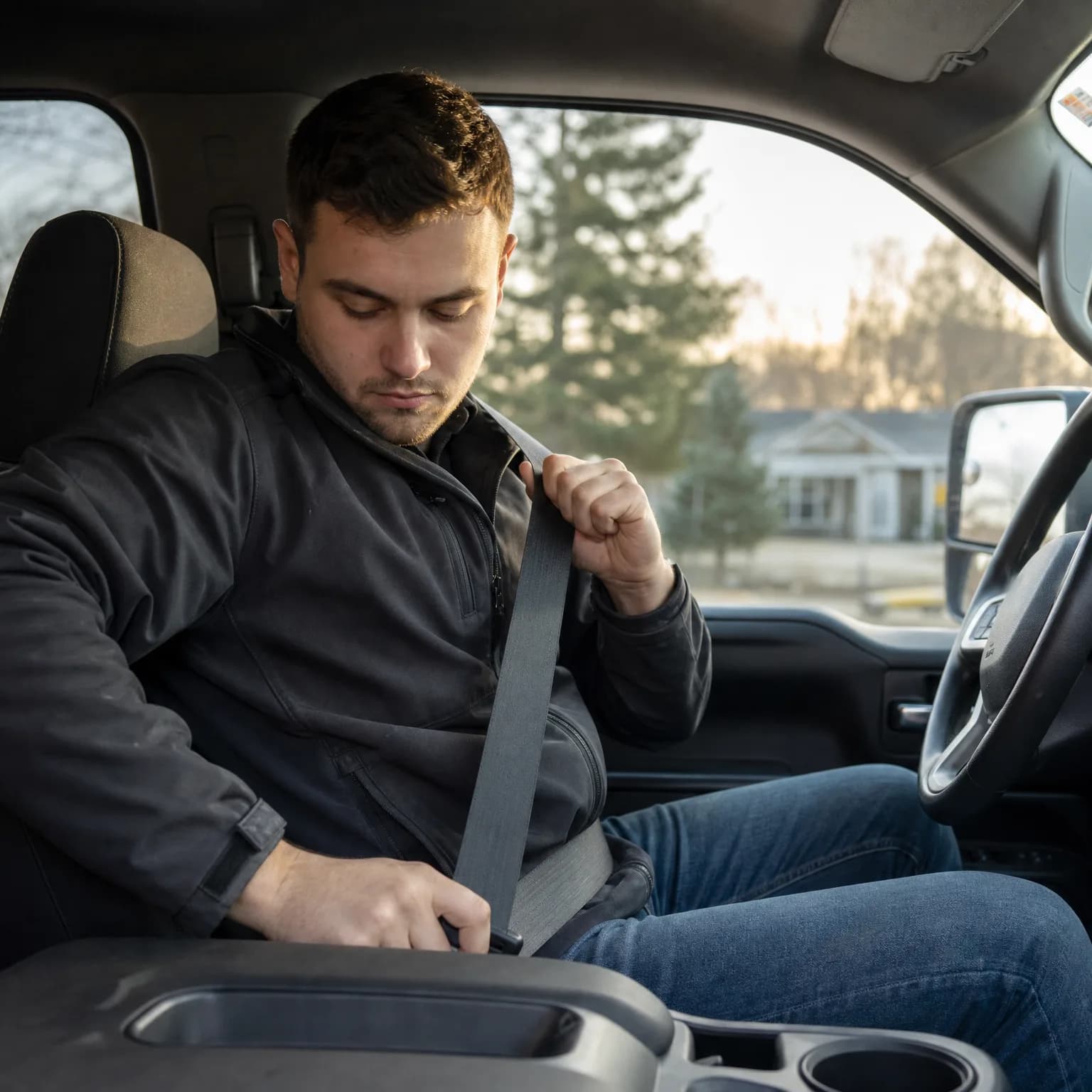
The TxDMV suspension notice states the lapse detection date, the vehicle VIN, and the 30-day surrender deadline. It directs you to either provide proof of continuous coverage or surrender your license plates and driver license to avoid further penalties. What the notice does not explain clearly: you cannot simply buy a new policy, show proof of current coverage, and have the suspension lifted.
Texas treats lapse-driven suspensions as administrative violations requiring formal reinstatement. Buying a new policy stops the clock from accumulating additional suspension days, but it does not erase the suspension already imposed. You must pay a $125 reinstatement fee to DPS, provide an SR-22 certificate of financial responsibility, and maintain that SR-22 filing for 2 years from the reinstatement date under Transportation Code §601.153.
The notice also does not mention the Occupational Driver License option. Most drivers assume they are completely barred from driving until reinstatement is complete. In reality, Texas offers a court-supervised hardship license called an Occupational Driver License that allows essential-need driving during the suspension period, but you must petition a county or district court to obtain it — DPS does not issue ODLs directly.


The Occupational Driver License Path for Uninsured Suspensions in Texas
An Occupational Driver License allows you to drive for work, school, or essential household duties during a suspension. Unlike some states that restrict hardship licenses to DUI-only cases, Texas permits ODLs for uninsured driving suspensions. You must file a petition in the county or district court where you reside, not with DPS.
The court requires: a completed petition form explaining your essential need, proof of that need such as employment records or school enrollment documentation, an SR-22 certificate from a licensed carrier, and payment of county-specific filing fees that typically range from $200 to $350 depending on the county. The court will schedule a hearing, review your petition, and if approved, issue a court order specifying the exact routes, destinations, and time windows you are permitted to drive.
Texas law caps ODL driving at 12 hours per day maximum, regardless of how many essential needs you list in your petition. The court order will enumerate specific locations — your home address, employer address, school address, medical provider address — and you are legally restricted to driving only between those locations during the approved time windows. Driving outside those parameters while holding an ODL is treated as driving on a suspended license, which carries criminal penalties including up to 180 days in jail and a $2,000 fine for a first offense under Transportation Code §521.457.
For uninsured suspensions, ignition interlock is not typically required unless the court independently orders it. SR-22 is mandatory for every ODL holder in Texas, with no exceptions. The SR-22 filing must remain active for the full suspension period plus the 2-year reinstatement filing period, meaning a 90-day suspension with 2-year SR-22 requirement results in a total 2.25-year filing commitment.
Court Petition vs DPS Reinstatement: Which Comes First
You can pursue both the ODL petition and full reinstatement simultaneously, but the timelines and costs are independent. The ODL petition through court addresses your immediate need to drive for essential purposes during the suspension. Full reinstatement through DPS ends the suspension entirely and restores unrestricted driving privileges.
For full reinstatement after an uninsured suspension, you must: obtain and maintain a new insurance policy meeting Texas minimum liability limits, file an SR-22 certificate with DPS through your carrier, pay the $125 reinstatement fee to DPS, and wait for DPS to process the reinstatement application. Processing typically takes 7 to 14 business days if submitted online through the DPS Driver License Reinstatement portal at txdps.state.tx.us. In-person processing at a DPS driver license office is available but does not significantly speed up the timeline.
If your vehicle was impounded or sold during the suspension and you no longer own a car, you can satisfy the SR-22 requirement with a non-owner SR-22 policy. Non-owner policies provide liability coverage when you drive a vehicle you do not own — a rental, a borrowed car, or a car you plan to purchase after reinstatement. Carriers including Dairyland, GAINSCO, The General, and Progressive write non-owner SR-22 policies in Texas, with monthly premiums typically ranging from $40 to $85 depending on your driving history and county.
The ODL court order does not shorten the suspension period. It only authorizes restricted driving during the suspension. To drive without restrictions, you must complete the full DPS reinstatement process.

Fix the Lapse That Cost You Your License
Get My Reinstatement SR-22 Quote
What Happens If You Let Coverage Lapse Again During the SR-22 Filing Period
Re-lapsing during the 2-year SR-22 filing period restarts the clock in Texas. Transportation Code §601.153 requires continuous SR-22 filing for the full period — if your carrier reports a lapse or cancellation to DPS at any point during those 2 years, DPS treats it as a new violation and issues a new suspension notice.
The new suspension is processed independently of the original reinstatement. You will owe another $125 reinstatement fee, and the 2-year SR-22 filing period restarts from the new reinstatement date. If you had 18 months remaining on your original SR-22 requirement when the lapse occurred, that progress is erased — the new filing period is a full 2 years from the second reinstatement.
Carriers report lapses to TexasSure within 24 to 48 hours of the effective cancellation date, just as they did for the original lapse. The detection and suspension process is identical. Most drivers do not realize the filing period has restarted until they receive the second suspension notice. By that time, the new suspension has already been processed and the 30-day surrender deadline is in effect.
To avoid this cycle: set up automatic premium payments with your carrier, monitor your bank account to ensure payments clear, and request email or text alerts for upcoming renewals. If you anticipate a gap in coverage due to financial hardship, contact your carrier before the lapse date to discuss payment plans or reduced-coverage options rather than allowing the policy to cancel outright.

Total Cost Stack: Reinstatement, SR-22 Filing, and Premium Increase
The $125 DPS reinstatement fee is a one-time payment. The SR-22 filing fee charged by your carrier is typically $15 to $50 one-time, due at policy inception. The larger ongoing cost is the premium increase tied to the SR-22 requirement and the uninsured violation on your driving record.
Texas drivers with a lapse-driven suspension pay approximately $140 to $240 per month for SR-22 liability coverage, compared to $85 to $140 per month for clean-record drivers in the same ZIP code. Over the 2-year SR-22 filing period, total premiums range from $3,360 to $5,760. If you pursued an ODL, add county court filing fees of $200 to $350 and attorney fees if you hired representation, which typically range from $500 to $1,200 depending on county and case complexity.
Non-owner SR-22 policies cost less than owner policies because they do not cover a specific vehicle. Monthly premiums for non-owner SR-22 in Texas typically range from $40 to $85. Over 2 years, total cost is approximately $960 to $2,040, plus the $125 reinstatement fee and $15 to $50 filing fee. Non-owner SR-22 is the most cost-effective path if you do not currently own a vehicle and do not plan to purchase one until after reinstatement is complete.
Estimates based on available industry data; individual rates vary by driving history, age, county, and carrier underwriting. Request quotes from multiple carriers — rate variation for SR-22 policies in Texas can exceed 40% between the highest and lowest quotes for the same driver profile.
Finding SR-22 Coverage After a Texas Lapse Suspension
Not all carriers write SR-22 policies, and not all SR-22 carriers accept drivers with recent lapse suspensions. Standard-tier carriers including State Farm, Allstate, and USAA offer SR-22 filing in Texas but typically decline applicants with suspensions in the past 12 months. Non-standard carriers including Dairyland, GAINSCO, The General, Bristol West, and Progressive write policies specifically for suspended-license drivers.
Dairyland and GAINSCO write both owner and non-owner SR-22 policies statewide and accept applicants immediately after suspension. The General and Direct Auto focus on high-risk owner policies and operate physical storefronts in most Texas metro areas. Progressive writes SR-22 policies online and does not require broker involvement, but rates for suspended-license applicants are typically higher than Dairyland or GAINSCO.
Request quotes from at least three carriers before selecting a policy. SR-22 rate variation is wider than standard auto insurance — the same driver profile can receive quotes ranging from $95 to $220 per month depending on the carrier's underwriting appetite for lapse-suspension cases. Provide accurate information about the suspension date, lapse duration, and reinstatement status when requesting quotes. Misrepresenting suspension details can result in policy rescission after the SR-22 is filed, which triggers a new lapse report to DPS and restarts the suspension cycle.
Once you select a carrier and pay the first month's premium, the carrier files the SR-22 certificate electronically with DPS within 24 to 72 hours. You do not need to submit the SR-22 yourself — the carrier handles the filing as part of the policy issuance process. DPS receives the filing, updates your driver record, and begins processing the reinstatement application once the $125 fee is paid.
Frequently Asked Questions
Can I get an Occupational Driver License in Texas if my suspension is due to driving without insurance?
Yes. Texas permits Occupational Driver Licenses for uninsured driving suspensions. You must petition the county or district court where you reside, provide an SR-22 certificate, and demonstrate essential need such as employment or school enrollment. The court issues an order specifying approved routes and time windows, typically capped at 12 hours per day.
How long does TexasSure take to report my lapse to TxDMV?
TexasSure receives lapse reports from carriers within 24 to 48 hours of the policy cancellation date. The suspension clock starts from the carrier-reported lapse date, not the day you receive the notice letter from TxDMV. Most drivers receive the suspension notice 30 to 45 days after the actual lapse occurred.
What happens if I let my SR-22 policy lapse during the 2-year filing period?
DPS treats the re-lapse as a new violation and issues a new suspension notice. You will owe another $125 reinstatement fee, and the 2-year SR-22 filing period restarts from the new reinstatement date. Progress on the original filing period is erased — the new requirement is a full 2 years from the second reinstatement.
Do I need a car to get SR-22 insurance after a Texas lapse suspension?
No. If you do not own a vehicle, you can file SR-22 with a non-owner policy. Non-owner SR-22 provides liability coverage when you drive a borrowed or rented vehicle and satisfies the DPS filing requirement. Monthly premiums typically range from $40 to $85 in Texas.
Can I buy insurance and skip the reinstatement fee if I just wait out the suspension period?
No. Texas lapse suspensions remain active until you complete the formal reinstatement process — buying new coverage does not lift the suspension. You must pay the $125 DPS reinstatement fee, file an SR-22 certificate, and wait for DPS to process the reinstatement application before the suspension is removed from your record.
How much does an Occupational Driver License cost in Texas?
Court filing fees vary by county and typically range from $200 to $350. You must also obtain SR-22 insurance before petitioning the court, which adds $15 to $50 one-time filing fee and $140 to $240 per month in premiums. If you hire an attorney to draft the petition, legal fees typically range from $500 to $1,200.
Which insurance carriers write SR-22 policies for Texas lapse suspensions?
Dairyland, GAINSCO, The General, Bristol West, Direct Auto, and Progressive write SR-22 policies for drivers with recent lapse suspensions in Texas. Standard carriers including State Farm and Allstate offer SR-22 filing but typically decline applicants with suspensions in the past 12 months. Request quotes from at least three carriers — rate variation can exceed 40% for the same driver profile.
Related Articles

TX Drive Clean Lapse to License Reinstatement Timeline
5/17/2026

Texas Drive Clean Suspension: ODL & Reinstatement
5/17/2026
How Long Does TX Drive Clean Suspension Last
5/17/2026

Texas Uninsured Suspension Cost: Fees, SR-22, Premium
5/17/2026

Insurance Lapse to License Reinstatement Timeline
5/17/2026
TX SR-22 Lapse During ODL: Fee and Clock Reset Rules
5/17/2026