
Step-by-Step: Reinstating a Louisiana License After Insurance Lapse
Get My Reinstatement SR-22 QuoteWhat Happens When Louisiana OMV Detects Your Insurance Lapse
Louisiana's Insurance Verification System (LAIVS) notifies OMV electronically when your insurer cancels your policy. OMV mails a notice giving you a brief window to provide proof of continuous coverage or face suspension of both your driver's license and vehicle registration. If you don't respond with proof, OMV suspends your registration immediately and your driver's license follows under Louisiana's No Pay, No Play statute (La. R.S. 32:866).
The dual suspension creates a compound problem: you can't legally drive, and you can't legally register a vehicle. The registration suspension blocks license reinstatement in most parishes until you resolve both. Louisiana treats the registration suspension as the primary enforcement lever, distinct from states that suspend only the driver's license.
OMV does not wait for a court hearing. The suspension is administrative under La. R.S. 32:863.1, processed entirely through OMV offices or omv.dps.louisiana.gov. You will not receive a trial date or appear before a judge unless you pursue a separate appeal, which few drivers win because the insurer's cancellation notice is treated as conclusive proof of lapse.
Restricted License Eligibility for Uninsured-Cause Suspensions in Louisiana
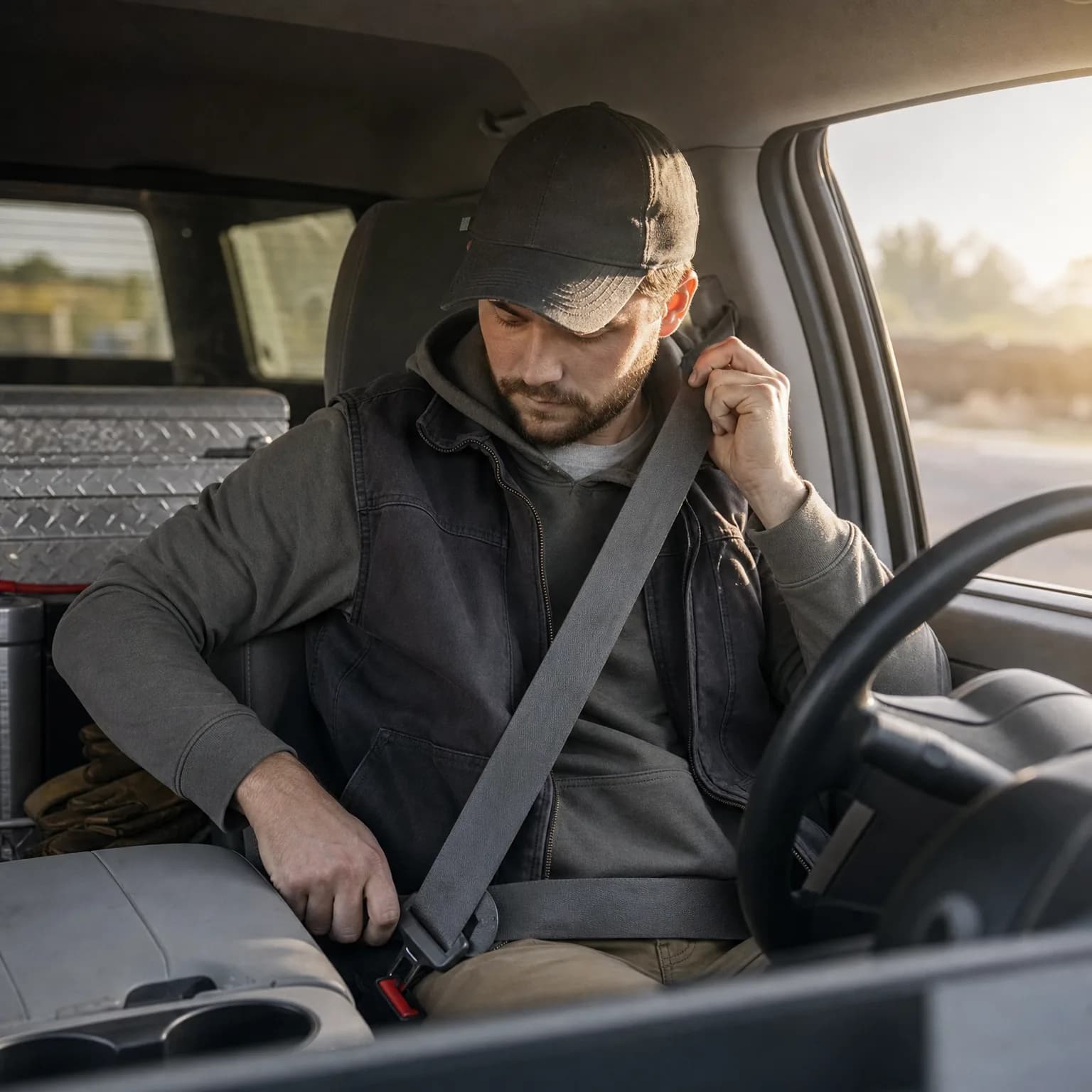
Louisiana issues Restricted Licenses during suspension periods, but eligibility depends on your suspension cause and your ability to satisfy OMV's preconditions. For insurance-lapse suspensions, Louisiana permits restricted licenses under La. R.S. 32:415.1, but you must file SR-22 proof of financial responsibility before OMV will process your hardship application.
The SR-22 filing requirement is immediate. You cannot apply for a restricted license, receive conditional approval, and then file SR-22. OMV requires proof that an SR-22 is already on file with the state at the time you submit your restricted license application. Most applicants purchase a non-owner SR-22 policy if they no longer own a vehicle or cannot afford full coverage on a registered car.
Restricted licenses issued for uninsured-cause suspensions do not require ignition interlock devices unless the underlying suspension also involves DUI. If your suspension is purely insurance-lapse-driven, you avoid the ignition interlock mandate that DUI-restricted applicants face under La. R.S. 32:378.2.


The Reinstatement Sequence: SR-22 Filing Before Application
Louisiana's reinstatement sequence is SR-22 first, application second, approval third. Contact a Louisiana-licensed insurer that writes SR-22 policies and request a policy effective immediately. The insurer files the SR-22 certificate with OMV electronically within 24 hours. You receive a copy by email or mail, but the electronic filing is what counts.
Once the SR-22 is on file, you can submit your restricted license application to OMV. Applications are submitted at any OMV office or through omv.dps.louisiana.gov. You will need proof of employment or hardship need (letter from your employer on company letterhead, school enrollment verification, or medical appointment documentation), the SR-22 proof you received from your insurer, and payment of the $60 reinstatement fee plus any outstanding fines or tickets tied to your suspension.
OMV processes restricted license applications on a rolling basis. Processing times vary by parish, but most applicants receive approval or denial within 10 to 15 business days. If denied, OMV mails a written explanation citing the missing documentation or unpaid fees that blocked approval. You can reapply immediately after correcting the deficiency.
Approved Purposes and Route Restrictions Under Louisiana's Restricted License
Louisiana's restricted license permits travel for employment, school, medical appointments, and other court- or OMV-defined necessary purposes. The license is not unrestricted. You cannot use it for social trips, errands unrelated to work or school, or recreational travel. Employers and schools must verify your schedule if OMV audits your compliance.
Route restrictions are not formally documented on the physical license. Louisiana does not issue a separate restricted-purpose card with printed route maps or hour windows. Instead, the restriction is enforced during traffic stops: if an officer stops you and your stated destination does not match an approved purpose, the stop becomes a violation of your restricted license terms and triggers immediate revocation.
Revocation is automatic. Louisiana does not hold a hearing before revoking a restricted license issued under hardship provisions. If you violate the restriction by driving outside approved purposes, OMV revokes the license administratively and you serve the remainder of your original suspension period with no hardship option available.

Fix the Lapse That Cost You Your License
Get My Reinstatement SR-22 Quote
Cost Stack: What You Pay to Reinstate After an Insurance Lapse
Louisiana's reinstatement cost has four layers: the original traffic citation fine (if your lapse was discovered during a stop), the $60 OMV reinstatement fee, the SR-22 filing fee charged by your insurer (typically $25 to $50), and the monthly premium increase for SR-22 coverage. Most Louisiana drivers report total out-of-pocket costs between $500 and $1,800 over the three-year SR-22 filing period.
The traffic citation fine varies by parish. Orleans Parish uninsured motorist tickets start at $500 for first offenses. East Baton Rouge Parish starts at $350. Rural parishes may assess lower fines, but the citation is separate from OMV's administrative suspension and must be paid before OMV will process your reinstatement or restricted license application.
SR-22 policies cost more than standard policies because insurers classify uninsured-cause drivers as high-risk. Non-owner SR-22 policies in Louisiana typically cost $35 to $70 per month depending on your parish, age, and prior coverage history. Standard SR-22 policies with liability coverage for an owned vehicle typically cost $90 to $160 per month. Rates drop after one year of continuous filing if you avoid further violations.

Non-Owner SR-22: The Path for Drivers Without a Vehicle
If your vehicle was impounded, sold, or never owned, you can satisfy Louisiana's SR-22 requirement with a non-owner SR-22 policy. Non-owner policies provide liability coverage when you drive a borrowed or rented vehicle but do not cover a vehicle you own or regularly use. Louisiana accepts non-owner SR-22 filings for reinstatement and restricted license applications under the same terms as standard SR-22 filings.
Non-owner policies cost less than standard policies because they carry lower risk for the insurer. Louisiana non-owner SR-22 premiums typically range from $35 to $70 per month depending on your parish and prior driving record. The SR-22 filing itself costs an additional $25 to $50 as a one-time fee at policy inception.
The non-owner policy must remain active for the full SR-22 filing period. If you cancel the policy or let it lapse, your insurer notifies OMV electronically and OMV re-suspends your license immediately. The lapse resets your SR-22 filing clock: Louisiana requires you to start the three-year filing period over from the date the new SR-22 is filed.
What Happens If Your SR-22 Policy Lapses During the Filing Period
Louisiana treats SR-22 lapses during the filing period as a new suspension trigger. Your insurer reports the cancellation to OMV through LAIVS within 24 hours. OMV suspends your license administratively without advance notice. You receive a suspension letter by mail, but the suspension is effective immediately upon OMV's receipt of the cancellation notice.
Re-lapsing resets your three-year SR-22 filing clock. Louisiana does not credit time already served under your previous SR-22. If you lapse two years into your filing period, you must file a new SR-22 and serve three full years from the new filing date. The reset applies regardless of the lapse duration: a one-day lapse triggers the same reset as a six-month lapse.
To reinstate after a mid-filing lapse, you follow the same sequence as your original reinstatement: purchase a new SR-22 policy, pay the $60 reinstatement fee again, and reapply for a restricted license if you need one. OMV does not waive fees or processing steps for repeat reinstatement applicants. Each lapse is treated as a separate administrative action requiring full reinstatement.
Frequently Asked Questions
Can I drive in Louisiana while my license is suspended for insurance lapse?
No. Louisiana suspends your driver's license and vehicle registration when your insurer reports a lapse. Driving during suspension is a criminal offense under La. R.S. 32:415 and adds jail time, additional fines, and license extension to your existing penalties.
How long does Louisiana require SR-22 filing after an insurance lapse suspension?
Does Louisiana's restricted license let me drive to work if I was suspended for no insurance?
Yes. Louisiana issues restricted licenses for employment, school, and medical travel under La. R.S. 32:415.1. You must file SR-22 proof of financial responsibility before OMV will process your restricted license application.
What is Louisiana's No Pay No Play law and how does it affect me after an insurance lapse?
Louisiana's No Pay No Play law (La. R.S. 32:866) restricts uninsured drivers from recovering the first $15,000 in bodily injury damages and $25,000 in property damage from an at-fault insured driver. The restriction applies even after you reinstate your license if the accident occurred during your uninsured period.
Can I reinstate my Louisiana license without a car after an insurance lapse?
Yes. Louisiana accepts non-owner SR-22 policies for reinstatement. You purchase a non-owner policy from a Louisiana-licensed insurer, the insurer files the SR-22 with OMV, and you pay the $60 reinstatement fee plus any outstanding fines.
What happens if I move to another state while my Louisiana SR-22 filing period is active?
Your SR-22 filing obligation stays with Louisiana until the three-year period expires. You must maintain continuous SR-22 coverage with a Louisiana-licensed insurer and comply with Louisiana's filing requirement even if you obtain a license in your new state.
Related Articles
Louisiana Uninsured Suspension: SR-22 & Reinstatement
5/17/2026

LA License Reinstatement Cost After Insurance Lapse
5/17/2026

Non-Owner SR-22 Louisiana After Uninsured Suspension
5/17/2026

MS License After Insurance Lapse: Reinstate Timeline
5/17/2026
MO Insurance Lapse: SR-22 Filing & Reinstatement Cost
5/17/2026

Reinstate Oklahoma License After Insurance Lapse
5/17/2026