
Repeat Uninsured Suspension in Illinois: Extended Filing & Costs
Get My Reinstatement SR-22 QuoteWhat Changes When You Face a Second Uninsured Suspension in Illinois
A second uninsured driving suspension in Illinois within 10 years triggers a mandatory 3-year SR-22 filing period and may require installation of a Breath Alcohol Ignition Interlock Device (BAIID) even if no DUI is involved. The Illinois Secretary of State's Safety and Financial Responsibility Division treats repeat insurance-related suspensions as evidence of chronic non-compliance, applying escalated penalties normally reserved for DUI offenders.
The first uninsured suspension typically carries a 1-year SR-22 filing requirement. The second offense jumps to 3 years. The reinstatement fee remains $70, but the extended filing period increases total cost significantly.
Most drivers discover the BAIID requirement only after their Restricted Driving Permit application is reviewed. The Secretary of State does not provide pre-application confirmation. You learn the BAIID mandate when the formal hearing officer issues the permit conditions.

Why Illinois Imposes BAIID for Non-DUI Repeat Uninsured Violations
Illinois uses BAIID as a monitoring tool for drivers the state considers high-risk for future violations, not just alcohol offenses. Under 625 ILCS 5/6-206.1, the Secretary of State has discretion to impose BAIID on any driver whose record demonstrates chronic non-compliance with insurance laws.
A second uninsured suspension within 10 years meets the statutory threshold for discretionary BAIID. The device monitors attempted engine starts and logs every ignition event. Monthly monitoring fees range from $80 to $120, adding $2,880 to $4,320 over a 3-year filing period.
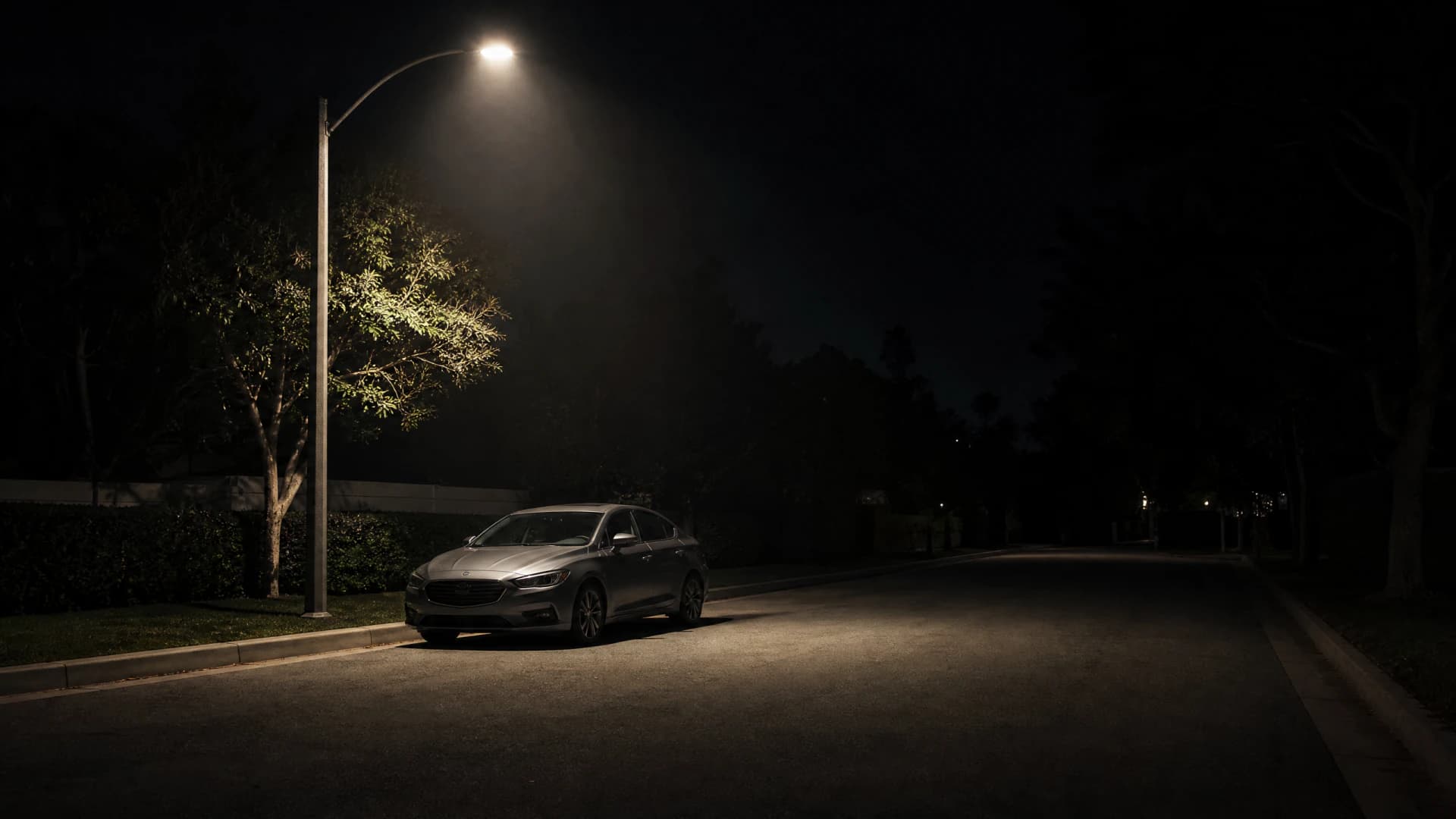
The BAIID mandate applies whether you drive your own vehicle or rely on a non-owner SR-22 policy. If you do not own a car, you cannot satisfy the BAIID requirement through a non-owner policy alone. You must arrange access to a BAIID-equipped vehicle for every trip the Restricted Driving Permit covers. This creates a practical barrier for drivers who lost their vehicle to impound or sold it during suspension.

How the Restricted Driving Permit Application Changes for Repeat Offenders
A first-time uninsured suspension allows informal RDP hearings at most Secretary of State offices. A second suspension requires a formal hearing before a hearing officer, scheduled weeks in advance. The $8 application fee is the same, but the procedural path is slower and more scrutinized.
You must submit proof of SR-22 insurance, proof of employment or other hardship need, any required evaluation documentation (the Secretary of State may order a risk assessment even for non-DUI cases), and the hearing fee payment. The hearing officer reviews your driving record, suspension history, and stated hardship need. Permit approval is not guaranteed.
Approved permits restrict driving to court-defined purposes: work, medical appointments, school, alcohol/drug treatment (if ordered), and other essential activities explicitly listed on the permit. Routes are specified. Hours are specified. The permit does not authorize discretionary trips, errands outside approved hours, or deviation from listed routes. Violating any restriction triggers automatic revocation without further hearing.
The True Cost of Extended SR-22 Filing and BAIID Over 3 Years
The $70 reinstatement fee is the smallest component. A 3-year SR-22 filing period at typical Illinois non-standard rates runs $140 to $220 per month for liability-only coverage, totaling $5,040 to $7,920 in premiums. Add BAIID installation ($100 to $150), monthly monitoring ($80 to $120 for 36 months), and annual calibration visits ($50 to $75 each).
Total estimated cost over the 3-year period: $8,000 to $12,500. This assumes no additional violations. If you allow the SR-22 policy to lapse even once during the filing period, the clock resets to zero. Illinois law treats a lapse during filing as a new uninsured offense, restarting the 3-year requirement.
Non-owner SR-22 policies reduce premium cost if you do not own a vehicle, but they do not eliminate the BAIID requirement. Non-owner premiums run $40 to $80 per month, saving $3,600 to $5,040 over 3 years compared to standard vehicle coverage. However, you still need access to a BAIID-equipped vehicle to satisfy RDP conditions.

Fix the Lapse That Cost You Your License
Get My Reinstatement SR-22 Quote
What Happens If You Violate RDP Conditions During Filing
The Secretary of State revokes the Restricted Driving Permit immediately upon discovering a violation. Common triggers: driving outside approved hours, taking unapproved routes, missing two consecutive alcohol/drug treatment sessions (if ordered), accumulating new traffic citations, or allowing SR-22 coverage to lapse.
Revocation is administrative. You receive a notice in the mail. The permit is void from the date stated in the notice. No hearing precedes revocation. You may request a formal hearing after revocation, but the burden is on you to prove the violation did not occur or was excusable under the permit terms.
If your RDP is revoked, you must wait until the full original suspension period expires before applying for reinstatement. The Secretary of State does not issue a second RDP during the same suspension period. For a second uninsured suspension, the base suspension period is 6 to 12 months. Revocation means you serve the remainder of that term with no driving privileges.

How to Avoid a Third Uninsured Suspension and Permanent Revocation
A third uninsured suspension in Illinois within 10 years results in license revocation, not suspension. Revocation means your driving privilege is cancelled. You must reapply for a new license after a mandatory waiting period, pass all written and road tests, and demonstrate financial responsibility through formal Secretary of State hearings.
The only reliable protection is continuous SR-22 coverage for the full 3-year filing period. Set up automatic premium payments. Monitor your policy status monthly. Most carriers send lapse notices 10 to 15 days before cancellation. If you receive a lapse notice, reinstate the policy before the cancellation date. Even a single-day lapse triggers Secretary of State notification.
If you cannot afford the monthly premium, switching to a non-owner SR-22 policy is legal and acceptable. The Secretary of State does not require you to own a vehicle during the filing period. Non-owner coverage satisfies the SR-22 mandate as long as the policy remains active and the carrier maintains the filing.
Finding SR-22 Coverage That Fits a 3-Year Filing Requirement
Not all carriers write SR-22 policies for repeat offenders in Illinois. Standard-tier insurers (State Farm, Allstate, Farmers) rarely accept drivers with multiple insurance-related suspensions. Non-standard carriers specialize in this profile.
Carriers confirmed to write SR-22 in Illinois for repeat uninsured violations: Acceptance Insurance, Bristol West, Dairyland, GAINSCO, Geico (non-standard tier), Infinity, Kemper, National General, Progressive (non-standard tier), The General. Monthly premiums vary from $85 to $220 depending on age, county, vehicle type, and whether you choose liability-only or broader coverage.
Non-owner SR-22 policies are available through Dairyland, GAINSCO, Geico, Progressive, The General, and USAA (military-affiliated drivers only). Non-owner premiums start at $40 per month but do not cover a specific vehicle. If you borrow or rent a car, verify the policy covers occasional use of non-owned vehicles.
Shop at least three carriers. Premium variation is wide. One carrier may quote $140 per month while another quotes $190 for identical coverage. The Secretary of State does not care which carrier files your SR-22 as long as the filing remains active.
Frequently Asked Questions
How long is SR-22 filing required after a second uninsured suspension in Illinois?
Illinois requires 3 years of continuous SR-22 filing after a second uninsured suspension within 10 years. The filing period starts when your SR-22 policy is issued and your license is reinstated, not when the suspension notice was issued. If your policy lapses at any point during the 3 years, the clock resets to zero.
Can I get a Restricted Driving Permit in Illinois with a second uninsured suspension?
Yes, but the application requires a formal hearing before a Secretary of State hearing officer, and approval often includes a BAIID requirement even without DUI. The hearing is scheduled weeks in advance, costs $8, and requires proof of SR-22 insurance, employment or hardship documentation, and any evaluation results the Secretary of State orders. Approval is discretionary.
Do I need BAIID for a second uninsured suspension even if I have no DUI?
The Secretary of State may impose BAIID on repeat uninsured offenders under 625 ILCS 5/6-206.1, treating chronic insurance non-compliance as high-risk behavior. BAIID is not automatic but is commonly ordered for second suspensions within 10 years. Monthly monitoring fees run $80 to $120, adding $2,880 to $4,320 over the 3-year filing period.
What happens if I let my SR-22 policy lapse during the 3-year filing period?
Illinois treats a lapse during the filing period as a new uninsured offense. The SR-22 filing clock resets to zero, extending the requirement by an additional 3 years from the date you reinstate coverage. Your Restricted Driving Permit is revoked immediately, and you must reapply after satisfying the new suspension period.
Can I use a non-owner SR-22 policy if I don't own a car after a second suspension?
Yes, non-owner SR-22 satisfies the Illinois filing requirement and costs $40 to $80 per month compared to $140 to $220 for standard vehicle coverage. However, if BAIID is required on your Restricted Driving Permit, you must arrange access to a BAIID-equipped vehicle for every trip the permit covers. Non-owner policies do not eliminate the BAIID mandate.
How much does a second uninsured suspension cost over the full 3-year filing period?
Total estimated cost ranges from $8,000 to $12,500: $70 reinstatement fee, $5,040 to $7,920 in SR-22 premiums, $100 to $150 BAIID installation, $2,880 to $4,320 in monthly monitoring, and $150 to $225 for annual calibration visits. Non-owner SR-22 reduces premium cost but does not eliminate BAIID fees if required.
What triggers automatic revocation of an Illinois Restricted Driving Permit?
Driving outside approved hours, deviating from listed routes, missing two consecutive treatment sessions (if ordered), accumulating new traffic citations, or allowing SR-22 coverage to lapse all trigger immediate revocation. The Secretary of State does not provide a hearing before revocation. You may request a formal hearing after revocation, but reinstatement is not guaranteed.
Related Articles

IL Uninsured Suspension: SR-22 Period & Fees Explained
5/17/2026

IL Insurance Lapse Suspension: Reinstate + SR-22 Costs
5/17/2026
SR-22 Cost After Uninsured Suspension Illinois
5/17/2026

Second Uninsured Suspension Stacks on Active SR-22
5/17/2026
Repeat Uninsured Suspension MI: 3-Year SR-22 Filing
5/17/2026

Repeat Uninsured Suspension Ohio: Filing & Fees
5/17/2026