
Georgia Uninsured Accident: License Suspension and Reinstatement
Get My Reinstatement SR-22 QuoteWhat happens to your Georgia license after an uninsured accident
Georgia Department of Driver Services (DDS) suspends your license immediately when you are reported for an accident while uninsured under O.C.G.A. § 40-9-20. The suspension is automatic—no hearing, no warning period. You receive a notice of suspension by mail, typically within 10 to 20 days of the accident report reaching DDS through law enforcement or the other party's insurance carrier.
Georgia's Electronic Insurance Compliance System (GEICS) cross-references accident reports against active insurance policies. When the system detects no policy on file at the time of the accident, DDS issues the suspension immediately. The suspension applies even if the accident was not your fault—Georgia law requires continuous liability coverage on all registered vehicles, and driving without it during an accident is a separate violation from the accident itself.
The suspension remains in effect until you satisfy reinstatement requirements: payment of a $200 reinstatement fee, proof of current insurance, and SR-22 filing maintained for 3 years post-reinstatement. If the accident resulted in property damage or injury, you may also face financial responsibility requirements under O.C.G.A. § 40-9-2, requiring you to pay or settle claims before reinstatement is approved.

Georgia Limited Driving Permit eligibility for uninsured accident drivers
Georgia allows uninsured accident drivers to petition for a Limited Driving Permit (LDP) through Superior Court under O.C.G.A. § 40-5-64. This is court-issued restricted driving authority, not a DDS administrative process. The petition is filed in the Superior Court of the county where you reside, and a judge decides whether to grant the permit based on documented need and SR-22 proof.
Eligibility requires three baseline conditions: (1) an active SR-22 filing on record with DDS before you file the petition, (2) documented employment, educational, medical, or other essential-purpose need for driving, and (3) payment of any court-ordered fees or fines related to the suspension. Most petitions fail because drivers file before securing SR-22 coverage—judges will not approve a petition when SR-22 is pending or filed after the court date.
Georgia courts exercise broad discretion. The LDP is a privilege, not a right, and judges can deny petitions even when statutory requirements are met. Denials are most common when the accident caused injury, when the driver has prior uninsured violations, or when employment documentation is incomplete. If your petition is denied, you must wait at least 30 days before refiling in most counties.
The LDP is a paper permit, not a replacement driver's license card. You carry it alongside your suspended license, and it expires when the suspension period ends or when you complete full reinstatement, whichever comes first.


What SR-22 filing means after an uninsured accident in Georgia
SR-22 is a certificate of financial responsibility filed by your insurance carrier directly with Georgia DDS. It proves you carry at least Georgia's minimum liability limits: $25,000 bodily injury per person, $50,000 bodily injury per accident, and $25,000 property damage. The filing itself is not insurance—it is proof of insurance maintained continuously for 3 years from your reinstatement date.
Georgia requires SR-22 filing for all uninsured accident suspensions under O.C.G.A. § 40-9-25. The 3-year clock starts when DDS processes your reinstatement application, not when you purchase the policy. If your policy lapses or cancels at any point during the 3-year period, your carrier notifies DDS electronically within 24 hours, and DDS re-suspends your license immediately. The re-suspension resets the 3-year clock—you start over from day one.
SR-22 filing fees range from $15 to $50 depending on the carrier. This is separate from your insurance premium. Most carriers add the SR-22 fee annually at renewal. Premiums for drivers with uninsured accident violations in Georgia typically range from $140 to $240 per month, depending on age, county, and prior driving history. Estimates based on available industry data; individual rates vary by driving history, vehicle, coverage selections, and location.
If you do not own a vehicle, you can satisfy Georgia's SR-22 requirement with a non-owner SR-22 policy. This covers liability when you drive a vehicle you do not own. Non-owner policies do not cover collision or comprehensive damage—they exist solely to meet filing requirements. Premiums for non-owner SR-22 in Georgia typically range from $30 to $70 per month.
How to petition for a Limited Driving Permit in Georgia
Petition for LDP in the Superior Court of your county of residence. Georgia does not offer a DDS administrative pathway for uninsured accident LDPs—all petitions go through the court system. Filing fees vary by county, typically $100 to $200. Some counties require a court appearance; others decide on the petition record without a hearing.
Before filing, obtain SR-22 proof from your carrier. Request a copy of the SR-22 certificate showing your name, policy number, and DDS filing confirmation. Attach this to your petition—judges will not grant permits without proof the SR-22 is active and on file with DDS. If your carrier has not yet transmitted the SR-22 to DDS electronically, wait until transmission is confirmed before filing.
Prepare employment or essential-purpose documentation. Acceptable proof includes an employer affidavit on company letterhead stating your work address, shift hours, and transportation requirements; school enrollment verification with class schedule; medical appointment documentation for ongoing treatment; or court-ordered program attendance records. The documentation must show why public transportation, rideshare, or carpooling is unavailable or impractical for your situation.
File the petition with the Superior Court clerk. Include the SR-22 certificate, employment or essential-purpose documentation, proof of residence, and the filing fee. The court assigns a hearing date or reviews the petition on the record. If a hearing is scheduled, appear on time—missed hearings result in automatic denial.
If the judge approves the LDP, the court issues a paper permit specifying allowed driving purposes and time restrictions. Common restrictions: driving to and from work only, during shift hours plus 1 hour before and after; driving to and from school only, during class hours; driving to medical appointments with 2-hour window around appointment time. Driving outside these approved purposes or times while holding an LDP results in immediate revocation and extends your suspension period.

Fix the Lapse That Cost You Your License
Get My Reinstatement SR-22 Quote
Georgia reinstatement process after uninsured accident suspension
Full reinstatement requires three steps completed in sequence: (1) payment of the $200 reinstatement fee to DDS, (2) proof of current insurance with SR-22 filing active and on record, and (3) verification that any accident-related financial responsibility requirements are satisfied. You cannot reinstate until all three conditions are met.
If the accident caused property damage or injury and you have not settled or paid claims, Georgia DDS will not process reinstatement until financial responsibility is resolved under O.C.G.A. § 40-9-2. This means either paying the other party's damages in full, entering a payment plan approved by the court, or obtaining a judgment showing you are not liable. Reinstatement cannot proceed while financial responsibility remains unsatisfied—this is the most common reinstatement delay for uninsured accident drivers.
Pay the $200 reinstatement fee online at online.dds.ga.gov or in person at any DDS Customer Service Center. Georgia DDS accepts online reinstatement for uninsured accident suspensions—you do not need an in-person visit if your SR-22 is on file and financial responsibility is cleared. Processing takes 3 to 5 business days for online applications, longer for in-person submissions.
Once DDS processes reinstatement, your license is active immediately. You must maintain the SR-22 filing for 3 years from the reinstatement date. If your policy lapses or cancels during this period, your license is re-suspended automatically, the 3-year clock resets, and you pay the $200 fee again.
Cost breakdown for uninsured accident reinstatement in Georgia
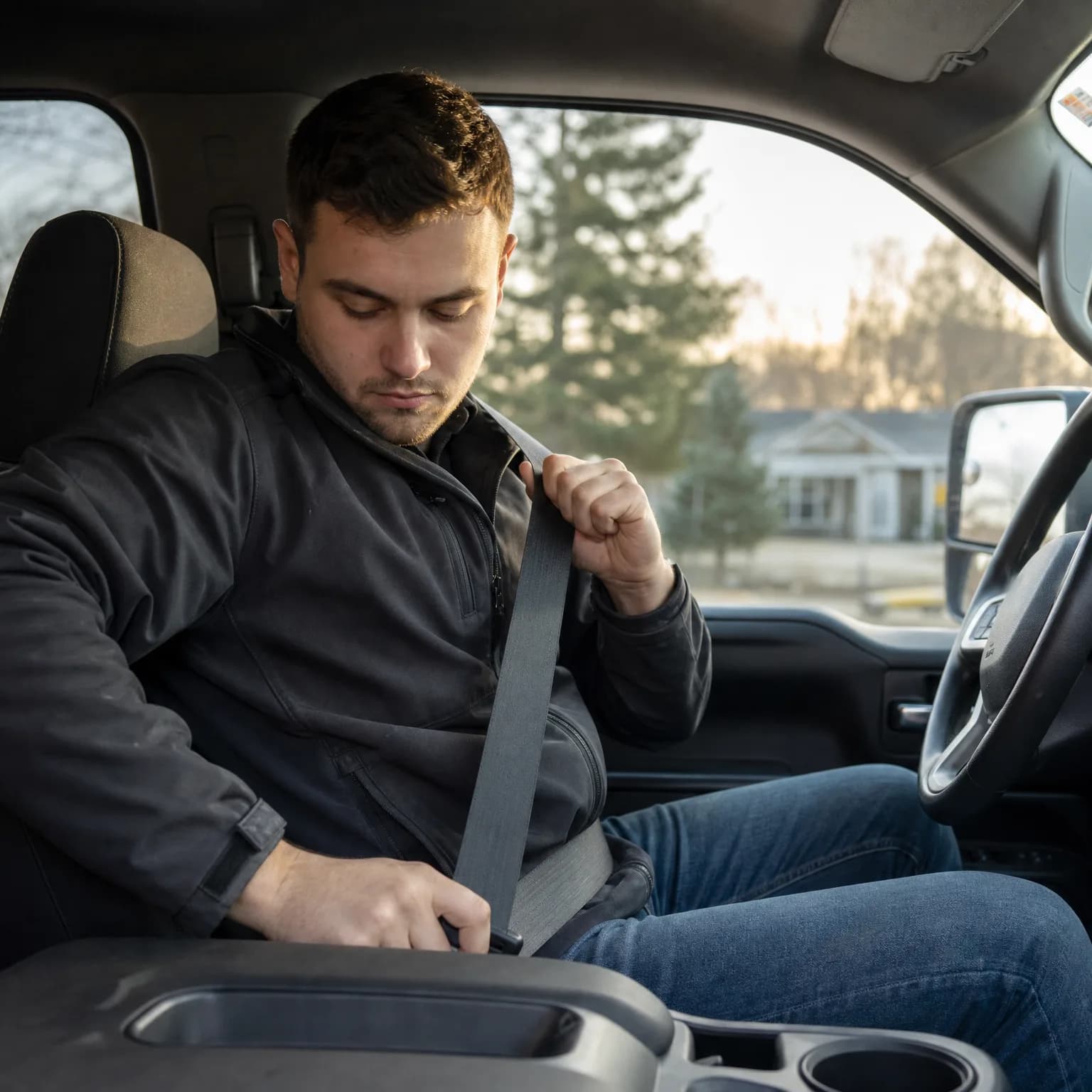
Reinstatement fee: $200 paid to DDS. This is the base fee for uninsured accident suspensions under O.C.G.A. § 40-5-25. If your suspension includes multiple violations—uninsured accident plus points accumulation, or uninsured accident plus FTA—additional fees apply per violation type.
SR-22 filing fee: $15 to $50 annually, paid to your insurance carrier. Most carriers charge this fee at policy inception and again at each renewal. The fee does not go to the state—it covers the carrier's administrative cost of filing and maintaining the SR-22 certificate with DDS.
Insurance premium increase: uninsured accident violations raise premiums by 40% to 80% in Georgia, depending on carrier and prior history. A driver previously paying $90 per month for liability coverage can expect to pay $140 to $240 per month after an uninsured accident violation. Non-owner SR-22 policies cost less—typically $30 to $70 per month—but provide no vehicle coverage.
Court petition fee (if filing for LDP): $100 to $200, paid to the Superior Court clerk in your county. This fee is separate from the reinstatement fee and applies only if you petition for a Limited Driving Permit.
Total first-year cost: $600 to $3,000, depending on whether you petition for an LDP, the insurance premium tier your carrier assigns, and whether financial responsibility claims are settled. Over the 3-year SR-22 filing period, total cost including premiums ranges from $5,000 to $9,000.
What happens if your SR-22 lapses during the filing period
Georgia DDS re-suspends your license immediately when your carrier reports an SR-22 cancellation or lapse. Carriers are required to notify DDS electronically within 24 hours of policy cancellation under O.C.G.A. § 40-9-25. You do not receive advance warning—the suspension takes effect the day DDS receives the cancellation notice.
The re-suspension resets the 3-year SR-22 clock. If you lapse 18 months into your 3-year filing period, you do not resume at 18 months when you reinstate—you start over at day one and owe another full 3 years. This applies even if the lapse was unintentional, even if you reinstate coverage the next day.
You must pay the $200 reinstatement fee again to lift the re-suspension. The fee is charged per suspension event, not per violation type. If you lapse and reinstate twice during your filing period, you pay $200 each time—$600 total over the 3-year period.
To avoid lapse, set up automatic payment with your carrier and monitor policy status monthly. If you switch carriers during the filing period, confirm the new carrier files SR-22 with DDS before canceling the old policy. A gap of even one day between policies triggers re-suspension.
Frequently Asked Questions
Can I get a Limited Driving Permit in Georgia before I have SR-22 coverage?
No. Georgia Superior Court judges require proof of active SR-22 filing on record with DDS before approving a Limited Driving Permit petition. Filing the petition before your carrier transmits SR-22 to DDS results in automatic denial in most counties. Obtain the SR-22 certificate showing DDS filing confirmation, then file the petition.
Does Georgia's 3-year SR-22 requirement start when I buy the policy or when I reinstate my license?
The 3-year clock starts on your reinstatement date, not your policy purchase date. If you buy SR-22 coverage 6 months before reinstatement, those 6 months do not count toward the 3-year requirement. Georgia measures the filing period from the date DDS processes your reinstatement application.
What happens if the accident was the other driver's fault but I was uninsured?
Georgia DDS suspends your license regardless of fault. O.C.G.A. § 40-9-20 requires continuous insurance on all registered vehicles—driving without coverage during an accident is a separate violation from the accident itself. Fault determines liability for damages, not whether your license is suspended.
Can I use a non-owner SR-22 policy if my car was impounded after the accident?
Yes. Non-owner SR-22 satisfies Georgia's filing requirement if you do not own a vehicle. This applies when your car was impounded, sold, or totaled after the accident. Non-owner policies cover liability when you drive a vehicle you do not own, and premiums are typically lower than standard SR-22 policies.
How long does it take to get a Limited Driving Permit approved in Georgia?
Court processing times vary by county, typically 2 to 6 weeks from petition filing to hearing or decision. Some counties schedule hearings within 10 days; others decide on the petition record without a hearing. If the judge denies your petition, you must wait at least 30 days before refiling in most counties.
What is financial responsibility and how does it block reinstatement in Georgia?
Financial responsibility under O.C.G.A. § 40-9-2 requires you to pay or settle claims for property damage or injury caused by the accident. If the other party files a claim with DDS and you have not paid damages, entered a payment plan, or obtained a judgment showing non-liability, DDS will not process reinstatement until financial responsibility is satisfied.
What happens if I drive outside the approved purposes on my Limited Driving Permit?
Driving outside approved purposes or time restrictions while holding an LDP results in immediate revocation of the permit and extends your suspension period. If you are stopped during unauthorized driving hours or for an unapproved purpose, the officer reports the violation to DDS, and your LDP is revoked without a hearing.
Related Articles
GA Uninsured Suspension: Fine, SR-22, Permit Rules
5/17/2026

Insurance After No-Insurance Suspension GA
5/29/2026

SR-22 Cost After Uninsured Suspension in Georgia
5/17/2026

Non-Owner SR-22 Georgia Uninsured Suspension No Car
5/17/2026

Reinstating Georgia License After Uninsured Fine
5/17/2026

GA Uninsured Fine Stack: Initial, 30-Day, Reinstatement
5/17/2026